Embrace the Middle Zone: A Dancing Rabbit Update
Published: Tue, 03/17/26
Updated: Tue, 03/17/26

Embrace the Middle Zone:
A Dancing Rabbit Update
I haven’t written about my straw bale building project in a while. That’s because I am in what I call the “middle zone” of late winter right now.
Liz here, describing for myself and you, dear reader, how to embrace the middle zone, where it feels like you’re going nowhere, but you still want to get somewhere.
Late winter is the perfect backdrop for this state of mind. March has cracked its whip here in Missouri with thunder and lightning storms, high winds, snow, mist, warm humid days, nights below freezing, fire danger warnings and tornadoes. And let’s not dwell on the various shades of brown everywhere in the natural world. Weather reports change several times a day, and often don’t reflect what I see with my own eyes. Uncertainty abounds.
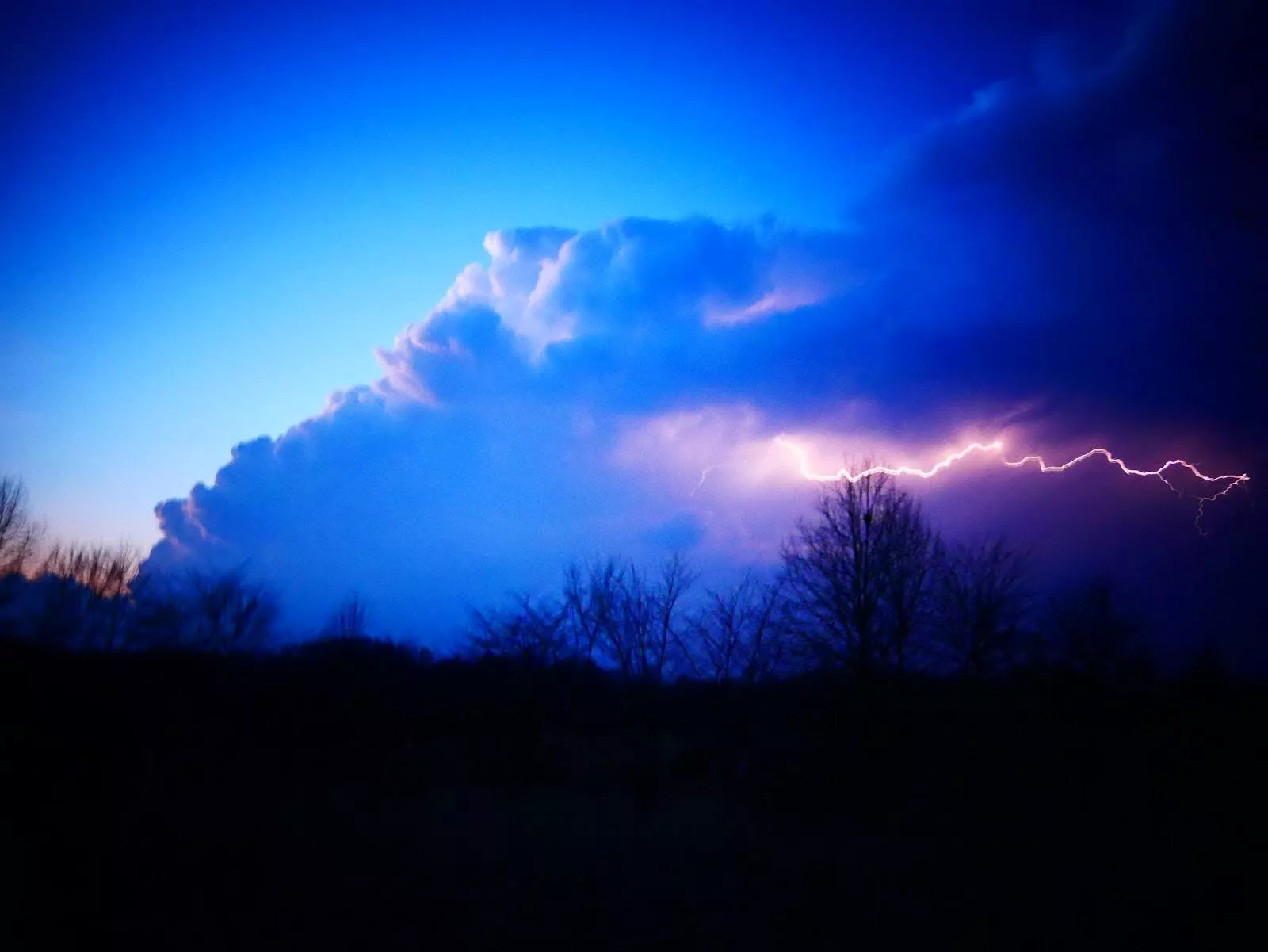
Lightning storm. Photo by Ben.
But do let’s talk about how the modern world expects productivity, regardless of the season. During late winter, I’m like a big dog who doesn’t want to be lifted into the bathtub: paws splayed, body rigid, resisting any progress, even if it's for my own good. Let me enjoy stasis for a few weeks longer, until my body tells me I’m ready to move forward, until I see bulbs blooming and green grass stubs poking through the mud, until clouds are high and puffy and winds become soft, fragrant
breezes. Let me wait until an urge rises in me that meets a good building idea and together they carry me over to my project to begin the building season.
I wrote back in December about repairing and oiling the earthen living room floor over at my straw bale building project, called the Hub. The smell of the floor oil mix lingered longer than I expected, so when Lindsey returned in January to live in one of the lofts, there was still a whiff of it. Maintenance of the living room floor was my major achievement for the winter; with relief I sank into hibernation and have been there ever since.

Hub living room floor, oiled and repaired. Photo by Liz.
Taking a good long break from the project in the winter is a strategy that keeps me from burning out in any given year. In the early years of this now seven-year project, I worked year-round except in the worst weather (we didn’t have an enclosed building until three years in) and it would take its toll eventually, in the dark days of winter, with me having less and less energy for work, and feeling irritable and discouraged. This is where being a Four in the Enneagram served me: I can’t
pretend I’m OK for very long when I’m actually not OK. At a certain point, I simply didn’t/wouldn’t get out of my armchair at home. Hence the break I take in winter, to head things off before they become extreme.
When the masonry heater over at the Hub started to malfunction several weeks ago, I tried hard to contain my irritation as I walked up the hill to see what was happening. And yeah, smoke tendrils were wafting from the top half of the beast and there was visible smoke in the kitchen. I forgot all about my irritation and moved into problem-solving mode, remembering how much my mind loves to chew on the variables of a situation and how satisfying it is to line up possible solutions. I
learned more about how the stove works, the maintenance of it over time, and more about how wind and temperature combine to encourage or discourage drawing smoke up the chimney. We even found a half brick at the top of the heater, cut with amazing precision and wedged tightly into its spot, that wasn’t mortared in place. I called on my neighbor, Mark, who was willing to climb up on the roof and check out the smoke stack and the chimney, which were both clear.
One thing I knew for certain: the heater was well constructed and conscientiously built. I had decided to build a masonry heater to model a more energy efficient form of a wood stove. The difference between a regular wood stove and a masonry heater is that particles that are released from burning wood in the firebox are circulated through air chambers, where they are mostly burned off before being drawn up the chimney. The other difference is that a masonry heater is built with fire
bricks, as well as a stone facade or, in our case, a facade built out of regular bricks and cob plaster, to absorb the heat and radiate it for hours after the fire goes out.

Unfinished Hub masonry heater. Photo by Liz.
I bought plans for the heater from a company called Firespeaking, which offers heater building plans and phone consultations. Alis and Graham attended a workshop before we started on how to build a masonry heater. It remains the most precise job we’ve undertaken, and we took it seriously because there was a safety factor to it. We have been using the heater for about four years now, without incident, so I figured we weren’t far from a solution. And for those of you that have to know, I
replaced the stove door gasket and mortared that one brick at the top. I also cleaned out some accumulated ash (the heater has three clean outs). Those were the “hardware” solutions. The other factors most likely were burning old wood, which smokes more, and having warmer temps outside, affecting the draw of smoke up the chimney.
And then, like the proverbial groundhog, I returned to my winter rest after that bit of excitement, with renewed gratitude for my snug cottage, having plenty of firewood left, and good eats. And I savor the time that is left before I naturally spring into action, and the momentum of building season moves my project forward.
🌸Upcoming Online Event
On Saturday, March 21, Dancing Rabbit community member Danielle Williams and former rabbit Kassandra Brown will host a free online Women’s Renewal Circle the day after the spring equinox.
This live Zoom gathering offers a gentle space for women to pause, reconnect with themselves, and set intentions for the season ahead in community.
Reserve your spot here.
Our Upcoming Workshops:
- April 19 - May 3: Visitor Program (5 spots left)
- May 22 - May 25: Women's Retreat (7 spots left)
- May 29 - June 1: Natural Building Workshop (5 spots left)
 |
Liz Hackney is the editor and a contributing writer for this publication. To see photos, videos and building deets about the Hub building project, go to: thehubcollective.substack.com. |


Dancing Rabbit Ecovillage, 1 Dancing Rabbit Lane, Rutledge, MO 63563, USA
Unsubscribe | Change Subscriber Options